Planning a pregnancy is one of the most critical steps in ensuring the health and safety of both mother and baby. Many couples begin the journey without knowing the essential evaluations, tests or lifestyle decisions that can significantly influence conception and pregnancy outcomes. Pregnancy planning is not just about preparing emotionally; it is about preparing medically, physically and nutritionally.
This blog breaks down the most critical tests, scans and preparations you need before and during pregnancy.
Why Pregnancy Planning Matters
Pregnancy Planning ensures a safer journey and reduces the risk of complications. Early evaluation helps detect underlying health conditions, improves fertility outcomes and prepares the mother’s body for a healthy pregnancy.
Planning ahead allows doctors to identify:
- Hormonal imbalances
- Thyroid issues
- Vitamin deficiencies
- Chronic medical concerns
- Genetic risks
With the right guidance, couples achieve smoother conception and healthier pregnancies.
Pre-Pregnancy Check – What It Includes
A pre-pregnancy check is the foundation of pregnancy planning. It assesses the woman’s overall health, reproductive function and risk factors.
Key components include:
- Medical History Review: Your doctor will ask about past illnesses, menstrual cycle regularity, previous pregnancies, miscarriages and family health history.
- Physical Examination: BMI, blood pressure and general health markers are evaluated.
- Hormonal Assessment: To detect PCOS, ovulation issues or thyroid disorders.
- Immunisation Status: Vaccines like Rubella, Hepatitis B and Varicella are checked.
- Lifestyle Evaluation: Diet, stress levels, sleep habits and physical activity patterns are assessed.
This helps identify what needs to be optimised before conception.
Essential Blood Tests Before Pregnancy
Blood tests help detect deficiencies or disorders that can affect fertility or early pregnancy.
- Complete Blood Count (CBC): Checks for anaemia or infection.
- Blood Group & Rh Factor: Identify risks such as Rh incompatibility.
- Thyroid Function Test: Thyroid levels directly impact fertility and foetal development.
- Blood Sugar Tests: Screening for diabetes or insulin resistance is crucial before pregnancy.
- Vitamin Levels: Especially Vitamin D and B12, which affect energy levels, fertility and foetal development.
- Infection Screening: Tests for HIV, Hepatitis B, Hepatitis C and Syphilis help ensure a safe pregnancy.
Lifestyle Preparation Before Pregnancy
Preparing your body is as important as medical testing.
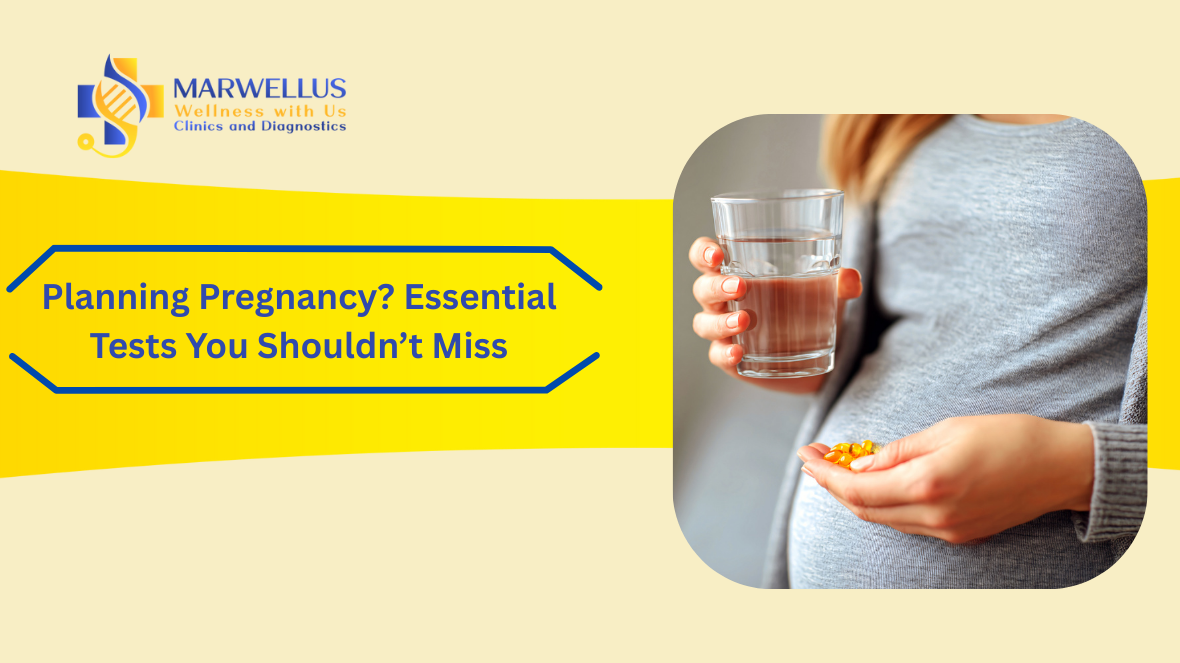
- Start Folic Acid: Helps prevent neural tube defects.
- Eat a balanced diet: Include iron, calcium, protein and omega-3 rich foods.
- Exercise regularly: Moderate activity improves hormonal balance and stamina.
- Avoid smoking and alcohol: Both can affect fertility and early pregnancy development.
- Manage stress: Healthy stress levels improve conception chances.
Tracking ovulation, improving sleep and maintaining a healthy weight further support the pregnancy journey.
Scans During Pregnancy and What They Reveal
Several scans during pregnancy help monitor the baby’s growth and health.
First Trimester Scans
- Early Pregnancy or Viability Scan: Confirms the pregnancy, foetal activity and gestational age.
- Nuchal Translucency (NT) Scan: Screens for chromosomal abnormalities.
Second Trimester Scan
Anomaly Scan
- A detailed scan between 18–22 weeks that examines the baby’s organs, spine, limbs and brain development. It is one of the most important scans during pregnancy.
Third Trimester Scans
- Growth Scan: Checks the baby’s growth pattern, fluid levels and placenta health.
- Doppler Scan: Measures blood flow to the baby and placenta.
- Biophysical Profile: Assesses movements, breathing, muscle tone and amniotic fluid.
These scans ensure that both mother and baby are progressing safely.
Additional Tests You May Need
Depending on individual factors, your doctor may recommend:
- Glucose tolerance test for gestational diabetes
- Thyroid monitoring for known thyroid disorders
- Amniocentesis for genetic concerns
- Carrier screening for high-risk couples
When to Consult a Gynaecologist Before Pregnancy
You should seek a pre-pregnancy consultation if:
- Your periods are irregular
- You have PCOS, thyroid issues or diabetes
- You have a history of miscarriage
- You are above 30–35
- You have difficulty conceiving
- You take long-term medications
Early consultation ensures safer and more successful pregnancy planning.
In Conclusion
Pregnancy planning gives couples the confidence and clarity they need for a healthy pregnancy journey. Understanding your tests, preparing your body and taking preventive measures greatly enhance the chances of a smooth pregnancy. With accurate evaluations and timely scans, you create the safest possible environment for your future baby.
Begin Your Pregnancy Journey with Confidence
If you are planning a baby, start with a complete pre-pregnancy check at Marwellus Clinics & Diagnostic Centre. Our specialists offer comprehensive testing, personalised guidance and essential pregnancy scans to support you at every step. Book your consultation today and prepare for a healthy, joyful pregnancy.
FAQs
What tests are included in a pre-pregnancy check?
A pre-pregnancy check includes blood tests, thyroid evaluation, vitamin levels, infection screening and hormonal assessments.
Which scans during pregnancy are mandatory?
The most important scans are the viability scan, NT scan, anomaly scan and third-trimester growth/Doppler scans.
When should I start Pregnancy Planning?
Ideally, begin planning at least 3–6 months before trying to conceive.
Do I need to take folic acid before pregnancy?
Yes, folic acid is recommended before conception to prevent neural tube defects.
What lifestyle changes improve pregnancy chances?
Balanced diet, regular exercise, reduced stress, healthy weight management and avoiding smoking/alcohol significantly improve fertility.